
Steven Hillenburg and the Shape of an Unusual Legacy
Steven Hillenburg was a rare creator who combined science and art. He did more than create a cartoon. He created a lively, quirky, hilarious, and alive environment. Hillenburg, well known for SpongeBob SquarePants, combined marine biology, visual storytelling, and humor like few others.
Steven McDannell Hillenburg, born August 21, 1961, at Fort Sill in Lawton, Oklahoma, was raised in a military household before moving to Anaheim, California. That move counted. Southern California let him explore beaches, tidal pools, and the Pacific coast’s mystery. Shores are playgrounds for many kids. Hillenburg used it as a notebook and lab.
His career would later dazzle millions, but the core of his identity was formed early. He loved drawing. He loved the sea. Instead of choosing one, he carried both passions forward, like twin currents moving in the same direction.
Early Life, Education, and the Ocean That Stayed With Him
I find Hillenburg’s early path especially compelling because it was not linear. He was not a child star or a cartoon prodigy launched overnight into the entertainment world. He built his future through steady curiosity.
He studied natural resource planning and interpretation with a marine resource specialization at Humboldt State University after growing up in Anaheim. He graduated with a BA in 1984. His academic journey shows something important about him. He did not view the water as landscape. He intensively researched marine habitats and how to interpret them.
He taught marine biology at the Orange County Marine Institute, now the Ocean Institute, before becoming an animator. He produced The Intertidal Zone, an instructional comic. That cartoon was a seed crystal, despite its modesty. It included the first traces of the oceanic imagination that would become a classic series.
Hillenburg made another big move in 1987 by enrolling at CalArts. He received an Experimental Animation MFA in 1992. This transition from marine teaching to animation does not disregard science. Transformation occurred. He found a new interest vessel. But now the water could talk, sing, joke, and dance.
The Family Who Framed His Personal World
Steven Hillenburg lived a public professional life, but he guarded his private life carefully. That balance shaped the way people understood him. He was famous, yet never seemed hungry for fame. He valued family time, privacy, and creative discipline more than the spotlight.
Kelly N. Hillenburg Jr., his father, was a soldier and aeronautical draughtsman. That detail fits. Precision, design, and structure characterized the family. Nancy Dufour Hillenburg, his mother, educated visually impaired kids. Her art shows compassion, patience, and a desire to help people. Steven Hillenburg’s character seems to be built on those two parental influences, technological order and human sensibility.
His brother was Brian Kelly Hillenburg. Brian’s wife Isabel and kids Emma and Hazel were Hillenburg members. They were rarely seen, yet their existence matters in any depiction of Steven Hillenburg since his life did not revolve around television. It was also about everyday, enduring relationships that anchor a person.
Karen Hillenburg and the Creative Intimacy of Marriage
Steven Hillenburg married Karen Umland in 1998. Karen, born November 10, 1962, became a chef and New School of Cooking instructor. Their union brought together two artistic professions that share timing, texture, constraint, and inventiveness.
I think this match reflects Hillenburg well. He was not limited artistically. His life seems to have been full of cautious makers. Karen was more than a famous creator’s wife. She was a maker who worked in a sector where craft and creativity met daily.
One little but meaningful homage to her lives in SpongeBob. Famous show character Karen Plankton was named after her. The detail is short yet telling. It illustrates how genuine affection can sneak into art like a bottle message.
The pair lived in San Marino, California, and prioritized family over show. Their solitude shielded their family. Hillenburg guarded his most crucial moments in an entertainment culture that turns people into permanent exhibitions.
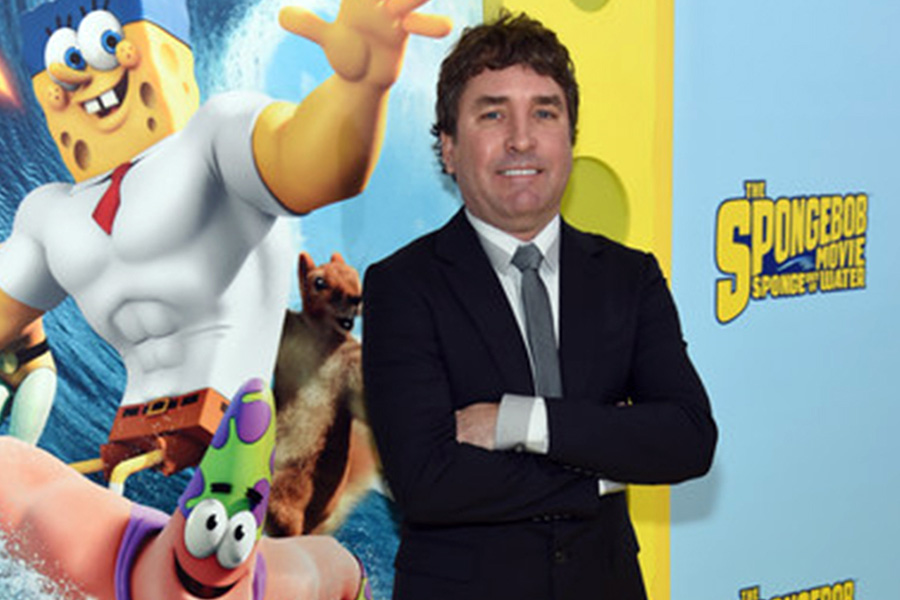
Clay Hillenburg and Fatherhood Beyond Fame
Also in 1998, Steven and Karen welcomed their son, Clay Hillenburg. Clay was their only child. Fatherhood arrived in the same year as marriage, at a moment when Hillenburg was on the edge of an extraordinary professional breakthrough.
That timing counts. SpongeBob debuted in 1999. While introducing the public to a new animation sensation, Hillenburg became a husband and father. His emotional geography must have been molded by his global and personal beginnings.
I do not think it is accidental that Hillenburg’s work, for all its absurdity, often carried warmth rather than cruelty. His stories were elastic and chaotic, but not cynical. They had the bright logic of someone who understood childhood not as something to mock, but as something to protect.
From Rocko’s Modern Life to SpongeBob SquarePants
Before developing his pop culture-defining series, Hillenburg wrote and directed Rocko’s Modern Life from 1993 to 1996. The show sharpened his professional instincts. He learned television narrative, humorous pace, and visual character development.
Everything changed with the notion. Hillsenburg created SpongeBob SquarePants, initially SpongeBoy Ahoy!He pitched it with a marine-inspired artistic vision. The 1999 series debut was not cautious. A dazzling splash landed.
He was showrunner for the first three seasons, which many fans consider the show’s core. SpongeBob SquarePants was his 2004 film. After that, he took a break from daily work but returned as an executive producer from 2014 to 2018.
Hard to overestimate his accomplishments. One of the most successful animated franchises was his. It developed into films, products, theatrical shows, and international fame. Emmys, Annies, and the National Cartoonists Society Television Animation Award followed. Scale alone doesn’t sustain his art. Yes, tone. He created a universe that smiled without smirking.
A Brief Timeline of Steven Hillenburg’s Life
| Year | Milestone |
|---|---|
| 1961 | Born on August 21 in Lawton, Oklahoma |
| 1984 | Graduates from Humboldt State University |
| 1984 | Begins marine education work and creates The Intertidal Zone |
| 1987 | Enters CalArts to study animation |
| 1992 | Earns MFA in Experimental Animation |
| 1993 | Begins work on Rocko’s Modern Life |
| 1998 | Marries Karen Hillenburg |
| 1998 | Son Clay Hillenburg is born |
| 1999 | SpongeBob SquarePants premieres |
| 2004 | Directs The SpongeBob SquarePants Movie |
| 2014 | Returns as executive producer |
| 2017 | Publicly shares ALS diagnosis |
| 2018 | Dies on November 26 in San Marino, California |
Private Strength, Public Influence, and Final Years
Steven Hillenburg was widely described as a perfectionist and a private person. Those traits often travel together. He cared deeply about the integrity of what he made and seems to have resisted the noise that fame can generate around creative work.
He announced his ALS diagnosis in 2017. He died of medical complications in San Marino, California, at 57 on November 26, 2018. Fans, artists, and coworkers were shocked by his passing since his work entered their lives so early and stayed there so long.
Culture carried his legacy after his death. His memory is maintained alive by anniversary tributes, franchise debates, and increased appreciation for his marine scientific roots. He is still mentioned when discussing animation that respects children and adults.
Hillenburg’s fusion of often-separate fields is most memorable. He showed that science could be fun, animation could be smart without being chilly, and family life could be central even in great success. Like a tide pool, his work appeared whimsical at first, but when one peered closer, life emerged.
FAQ
Who were Steven Hillenburg’s parents?
Steven Hillenburg’s parents were Kelly N. Hillenburg Jr. and Nancy Hillenburg. His father worked as a draftsman and designer for aerospace companies after military service, while his mother taught visually impaired students.
Who was Steven Hillenburg’s wife?
Steven Hillenburg’s wife was Karen Hillenburg, née Umland, born on November 10, 1962. She was a chef and cooking instructor at the New School of Cooking, and the couple married in 1998.
Did Steven Hillenburg have children?
Yes, Steven Hillenburg had one child, a son named Clay Hillenburg, who was born in 1998.
Did Steven Hillenburg have siblings?
Yes, he had a brother named Brian Kelly Hillenburg. Brian and his wife Isabel had two daughters, Emma and Hazel.
What did Steven Hillenburg study before animation?
Before pursuing animation professionally, Steven Hillenburg studied marine-focused Natural Resource Planning and Interpretation at Humboldt State University, earning his degree in 1984.
How did marine biology influence his creative work?
Marine biology shaped the foundation of his imagination. His teaching work and his comic The Intertidal Zone helped inspire the underwater setting, creatures, and playful scientific texture that later defined SpongeBob SquarePants.
When did SpongeBob SquarePants begin?
SpongeBob SquarePants premiered in 1999. Steven Hillenburg created the series and served as showrunner during its first three seasons.
When did Steven Hillenburg die?
Steven Hillenburg died on November 26, 2018, in San Marino, California, at age 57, following complications from ALS.
Why is Steven Hillenburg still so influential?
He remains influential because he created a world that crossed generations. His work combined visual invention, sincere humor, and a marine biologist’s eye for detail, making his storytelling feel both playful and enduring.