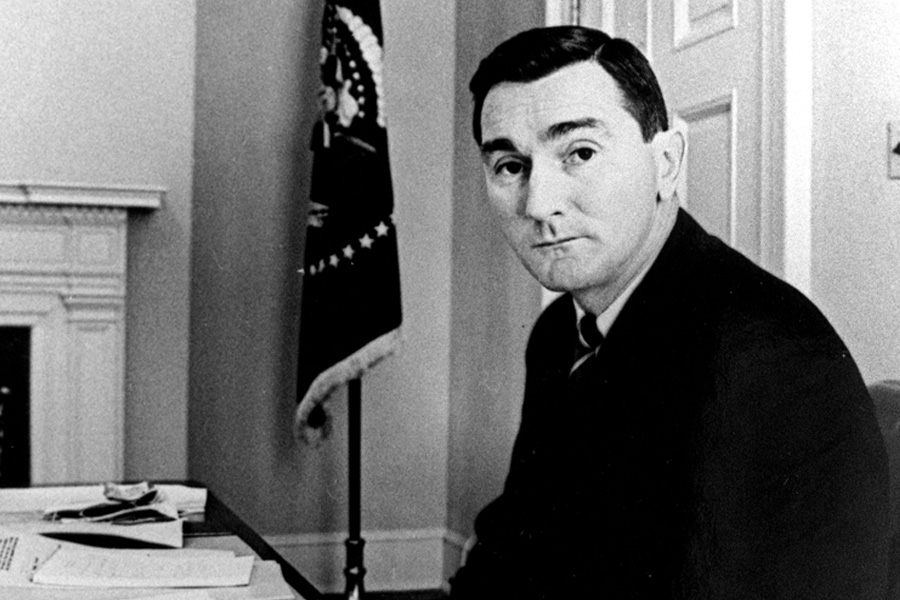
Kenneth O Donnell at the Center of Power
Kenneth O’Donnell was one of the most significant players behind the scenes in the John F. Kennedy White House. He was not president, cabinet secretary, or public speaker. Yet he moved like a big door hinge. He regularly touched the frame as the administration moved.
Kenneth Patrick O’Donnell was born in Worcester, Massachusetts, on March 4, 1924. He was raised in a working-class Irish-American home with discipline and loyalty. Early influences counted. They shaped the steady, quiet, and deeply committed man who would become one of President John F. Kennedy’s closest advisors.
O Donnell is remembered as a political aide. That description is correct but overly brief. He fixed, scheduled, confided, strategized, and witnessed history. He was appointments secretary and special assistant during the Kennedy administration from 1961 to 1963, giving him tremendous control over presidential access and White House routines.
Early Life and Family Background
Massachusetts anchored Kenneth O’Donnell. His parents, Alice M. and Cleo A. O Donnell, raised him. Few details about both parents are public, but the outline is important. In the early 20th century, his steady Irish-American family presumably valued family togetherness, hard labor, and aspiration without fanfare.
I think that background helps explain his later style. O Donnell did not project glamour. He projected usefulness. In a political age full of performers, he became indispensable by being reliable. That quality often begins at home.
His family also connected him to Boston’s ethnic and political life. Mid-century Massachusetts Irish-American families wielded power through neighborhood links, church networks, military service, education, and local party politics. That pattern fit O’Donnell, who took it to the Oval Office.
Military Service and the Road to Politics
Like many men of his generation, Kenneth O Donnell was shaped by World War II. He served in the U.S. Army Air Forces during the 1940s. Military service gave structure to many postwar American political careers, and O Donnell’s path was no exception.
He graduated from Harvard in the late 1940s after the war. He was powerful due to his combat experience and high education. He moved between plainspoken Massachusetts politics and polished national leadership. He spoke both languages.
Massachusetts Democratic politics included O Donnell by the 1950s. Then, political relationships were based on trust as much as philosophy. Effort, handshakes, and devotion drove campaigns. It was O’Donnell’s native habitat. His interest in politics went beyond show. He saw politics as machinery.
The Kennedy Connection
Kenneth O Donnell became deeply connected to John F. Kennedy during Kennedy’s rise in national politics. By the time JFK launched his successful 1960 presidential campaign, O Donnell had already become one of the trusted men around him.
Boston Kennedy loyalists formed the Irish Mafia, which included him. The name reflected their ethnicity and intense commitment. That circle included Larry O’Brien, Dave Powers, and O’Donnell. These were not decorative aids. Hidden behind the drape were steel cables.
O Donnell became appointments secretary and top assistant when Kennedy took office in January 1961. That job title seemed administrative, but it was crucial. Controlling the president’s schedule determined access, influence, and timeliness. Politics is frequently about time.
Life Inside the Kennedy White House
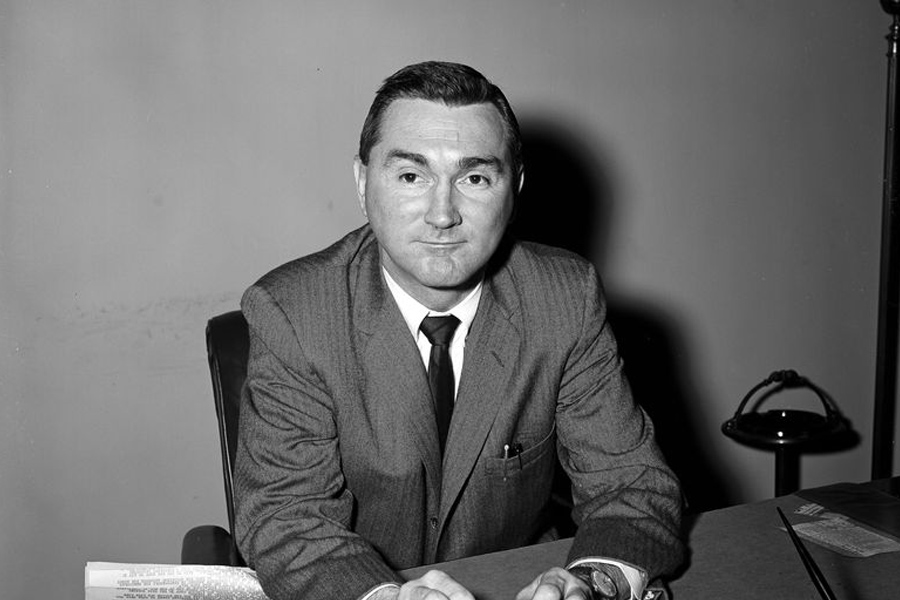
As appointments secretary, Kenneth O’Donnell controlled who saw the president and when. He was an administrative gatekeeper due to that duty. In an hour-sensitive atmosphere, he planned meetings, balanced political demands, and maintained order.
I imagine him as a storm-controlling air traffic controller. Cabinet, MPs, donors, international guests, party leaders, and pals demanded the president’s time. O Donnell had to separate urgency from noise. What could wait and what couldn’t was crucial. Kennedy’s energy and focus were also his responsibility.
His responsibilities included:
| Area | Role |
|---|---|
| Scheduling | Managed presidential appointments and daily access |
| Political strategy | Coordinated with Democratic leaders and Congress |
| Internal operations | Helped organize White House flow and communication |
| Personal support | Served as a trusted adviser in private moments |
This mix of duties made him more than a bureaucrat. He became one of the men who translated presidential intention into daily action.
Family Life and Marriage
Although Kenneth O’Donnell’s political activity was rigorous, his personal life was crucial to him. He married Helen Sullivan O’Donnell 1947. She is his most constant spouse and his partner during his most critical public professional years.
Helen was active in Boston’s political affairs and civic life as an Irish-American from Massachusetts. While her husband toiled in national politics, she maintained the private sphere that enabled it. Many political families rely on home life as silent support. It seems especially true here.
Daughter Helen and son Kenneth O Donnell Jr. were the couple’s offspring.Both seem to have enjoyed quiet lives away from Washington spotlight. The privacy is telling. Kenneth O’Donnell’s family did not establish a prominent dynasty despite their proximity to national authority.
Some relationship data lists Asta Hanna Helga Steinfatt as a spouse. That claim contradicts the mainstream history of O Donnell. His biography typically credits Helen Sullivan O Donnell as his family spouse.
Moments of History: 1962 and 1963
Kenneth O Donnell’s place in history is inseparable from two defining chapters of the Kennedy presidency: the Cuban Missile Crisis in 1962 and the assassination of President Kennedy in 1963.
O Donnell saw the administration’s difficult decision-making during the Cuban Missile Crisis. October was the most hazardous month of the Cold War. The globe appeared to be on a tight wire between Washington and Moscow. O Donnell, one of Kennedy’s closest advisers, seen the president under strain and helped develop these memories.
In Dallas, November 22, 1963, followed. The journey with Kennedy made O Donnell one of the most prominent figures in the assassination afterward. It changed more than the nation. It ruined Kennedy’s closest friends’ private lives.
O Donnell felt the loss severely. He did not grieve a faraway superior. He mourned a familiar and trusted colleague. Later accounts emphasize how Kennedy’s death touched him deeply. O Donnell was haunted by the incident for years.
Post White House Years
After the Kennedy years, O Donnell continued to work in political consulting and Democratic advisory roles through the 1960s and into the 1970s. He remained connected to the Kennedy family and to the mythology and memory of the administration.
He helped preserve the Kennedy presidency’s texture. Biographers, historians, and political analysts have looked to O Donnell for period chronicles. He was valuable because of closeness. He had seen the machines within. He realized that the polished public image sometimes hid the stress, inventiveness, discipline, and emotional weight of leadership.
On September 9, 1977, Kenneth O Donnell died in Boston, Massachusetts, at the age of 53. His relatively early death closed the life of a man who had spent his best years standing at the shoulder of power.
A Brief Timeline
| Year | Event |
|---|---|
| 1924 | Born in Worcester, Massachusetts |
| 1940s | Serves in the U.S. Army Air Forces during World War II |
| Late 1940s | Graduates from Harvard University |
| 1947 | Marries Helen Sullivan O Donnell |
| 1950s | Builds career in Massachusetts Democratic politics |
| 1960 | Works on John F. Kennedy’s presidential campaign |
| 1961 | Becomes White House appointments secretary |
| 1962 | Serves during the Cuban Missile Crisis |
| 1963 | Present during the Dallas trip and JFK assassination |
| 1964 to 1970s | Continues in political consulting and advisory work |
| 1977 | Dies in Boston, Massachusetts |
Why Kenneth O Donnell Still Matters
What makes Kenneth O Donnell memorable to me is not fame in the usual sense. It is function. He shows how history is often shaped not only by those at the podium, but by those who guard the staircase behind it.
He shaped the contemporary White House assistant as administrator and power broker. He was devoted without being theatrical, important without being outspoken, and firmly involved in 20th-century political dramas. His climb from Irish-American Massachusetts native to presidential government engine room symbolizes a larger American tale.
His family history enriches that portrayal. His public role was supported by his parents, wife, and children, who stayed out of politics. His biography is defined by his public intensity and private reserve.
FAQ
Who was Kenneth O Donnell?
Kenneth O Donnell was an American political aide and one of President John F. Kennedy’s closest advisers. He served as White House appointments secretary and special assistant during the Kennedy administration from 1961 to 1963.
When was Kenneth O Donnell born?
He was born on March 4, 1924, in Worcester, Massachusetts.
Who were Kenneth O Donnell’s parents?
His parents were Alice M. O Donnell and Cleo A. O Donnell. Public information about them is limited, but they are associated with his Massachusetts Irish-American upbringing.
Who was Kenneth O Donnell’s wife?
The spouse most widely recognized in his biography is Helen Sullivan O Donnell, whom he married in 1947.
Did Kenneth O Donnell have children?
Yes. He is associated with at least two children mentioned in the provided material: Helen O Donnell and Kenneth O Donnell Jr.
What was Kenneth O Donnell’s role in the White House?
He managed presidential scheduling, controlled access to John F. Kennedy, coordinated political matters, and served as a senior adviser within the administration.
Was Kenneth O Donnell involved in the Cuban Missile Crisis?
Yes. He was part of the inner circle present during the Kennedy administration’s management of the 1962 Cuban Missile Crisis.
Was Kenneth O Donnell present during JFK’s assassination?
Yes. He was with President Kennedy during the Dallas trip on November 22, 1963, and later became one of the most noted voices describing the aftermath.
What happened to Kenneth O Donnell after the Kennedy administration?
After JFK’s death, he worked in political consulting and remained connected to Democratic politics and the Kennedy family’s broader circle.
Is there a verified net worth for Kenneth O Donnell?
No. There is no verified public net worth record for him. He is generally remembered as a public servant whose income came from government service and later consulting work.